
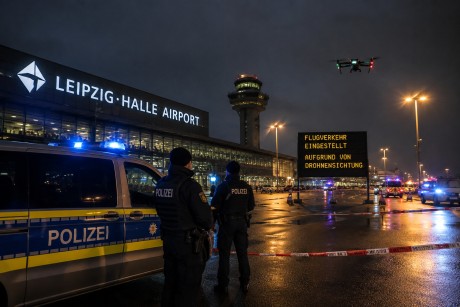
Germany has formally accused Russia of orchestrating a drone attack at Leipzig/Halle Airport, characterizing the incident as part of an ongoing series of hybrid attacks designed to destabilize the nation and inflict substantial damage. The Interior and Foreign Ministers, Alexander Dobrindt and Johann Wadephul, have asserted that investigators uncovered evidence suggesting the Russian state’s involvement in providing both the necessary equipment and expertise for the attempted attack, while operatives at a lower echelon were allegedly enlisted to execute it.
The drone, discovered within the airport’s security zone on August 4, was armed with explosives and found near a Ukrainian Antonov cargo aircraft utilized for transporting weapons to Ukraine. Although the explosive device did not detonate, German authorities warned of the potential for significant destruction had it gone off. Subsequent investigations revealed traces of a military explosive known as hexogen near the airport, alongside another drone. Initially, it was suspected that a second drone might have been part of the scheme, but this theory has since been reassessed.
In response, Germany plans to implement a series of measures against Russia. These actions include imposing additional sanctions, tightening entry controls for Russian nationals, targeting individuals connected to Russian activities, and taking action against Russia’s so-called shadow fleet, which facilitates the transportation of Russian oil and other commodities. Moreover, Berlin is backing a new European Union sanctions package aimed at further Russian-linked companies and organizations.
Foreign Minister Wadephul emphasized that while Germany is not at war with Russia, it has increasingly become a target of hybrid warfare, which encompasses alleged sabotage efforts, disinformation campaigns, threats, and acts of destabilization. In a show of support, Germany’s European and NATO allies have expressed their solidarity, with European leaders underscoring the necessity of a united response to what they describe as an escalating hybrid threat from Russia. Russian President Vladimir Putin, however, dismissed the allegations and criticized the proposed sanctions, claiming they run counter to Germany’s interests.
The German government has briefed its NATO and European counterparts on the ongoing investigation and the intended measures. NATO Secretary General Mark Rutte indicated that Germany had presented evidence implicating Moscow, while European Commission President Ursula von der Leyen promised ongoing support for Germany. The incident at Leipzig signifies a substantial worsening of relations between Germany and Russia, already strained due to Moscow’s comprehensive invasion of Ukraine. German officials and security analysts caution that this airport incident may signify a broader pattern of suspected Russian-linked activities across Europe, involving sabotage, drone-related occurrences, and other security threats, with investigations underway in various European nations to explore potential connections among these incidents.