
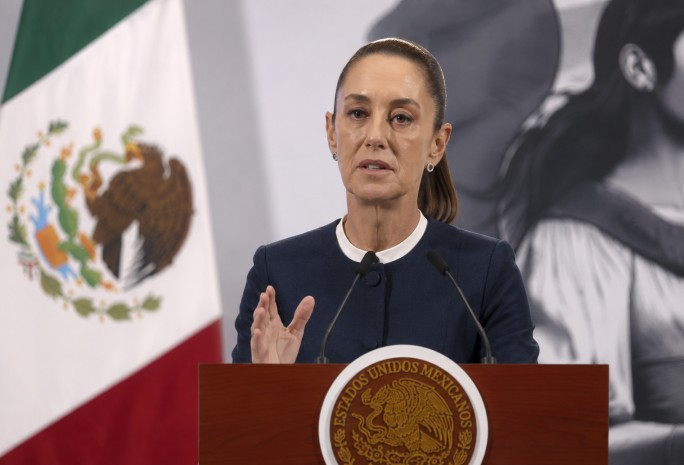
In response to the recent imposition of a 10% tariff by the United States on Mexican exports outside the USMCA trade agreement, Mexican President Claudia Sheinbaum has announced efforts to secure long-term trade stability. She described the U.S. decision as unilateral and emphasized Mexico’s commitment to preventing unexpected future tariffs while striving to maintain preferential trade conditions compared to other nations.
Sheinbaum acknowledged the complexities involved in negotiations with the U.S., which are exacerbated by President Donald Trump’s protectionist trade policies. Despite these challenges, the Mexican government is focused on establishing a long-term trade agreement that would offer greater certainty to investors and bolster the country’s trade position. This includes addressing sector-specific tariffs that currently impact key Mexican exports, such as automobiles, steel, aluminum, and other raw materials.
As discussions continue, the review of the USMCA trade agreement remains a focal point for both nations. U.S. officials are advocating for stricter regional content rules in significant industries, aiming to enhance the agreement’s impact on domestic production. In contrast, Mexico is promoting the idea of regional integration that benefits both economies while preserving the close trade relationship that has been cultivated over the years.
The ongoing negotiations underscore the importance of a balanced approach that considers the interests of both countries. Mexico’s aim is to foster an environment that not only supports its economic growth but also aligns with the evolving trade dynamics dictated by its northern neighbor. The outcome of these discussions could significantly influence the future of trade relations between Mexico and the United States.