
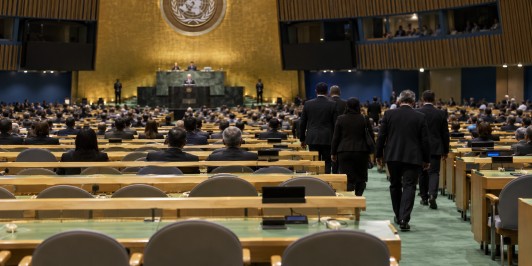
The diplomatic tensions between the United States and countries like Iran and Cuba were starkly highlighted at the United Nations General Assembly when representatives from these nations walked out during President Donald Trump’s address. This dramatic move underscores the strained relations and potential geopolitical consequences as the U.S. administration pushes for more stringent measures against these countries.
The walkout by the Iranian delegation came as President Trump criticized the Islamic Republic’s actions and hinted at further U.S. military operations should diplomatic negotiations fail. Trump emphasized the choice facing the United States: to reach an agreement with Iran or pursue additional measures. This stance is part of a broader U.S. appeal to the international community to increase economic pressure on Tehran. Although Iranian President Masoud Pezeshkian and Foreign Minister Abbas Araghchi were in New York for the assembly, they were not present in the chamber during the speech.
Meanwhile, Cuban representatives exited the assembly after President Trump labeled Cuba a “failed state” and called for fundamental changes on the island. Trump asserted that freedom would eventually come to Cuba, and he reiterated the U.S. position of preventing foreign adversaries from establishing a foothold there. His comments reflect ongoing U.S. efforts to drive political and economic change in Cuba, despite longstanding tensions.
These departures from the UN General Assembly are emblematic of the contentious international environment and the challenges in U.S. foreign policy toward nations it considers adversarial. The episode during Trump’s speech provided a public stage for the discord, as he laid out his administration’s policies on key international issues before a global audience.