
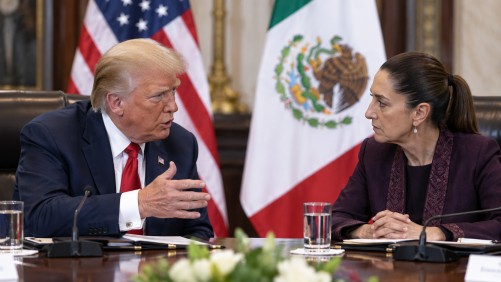
The call for heightened action against drug trafficking by the United States could lead to intensified security measures in Mexico, potentially altering the dynamics of cross-border cooperation. President Donald Trump has urged the Mexican government to strengthen its efforts to combat the flow of illegal drugs into the U.S., a move that may impact both nations’ strategies in addressing organized crime and drug cartels.
In an official communication to Congress, Trump acknowledged the efforts of Mexican President Claudia Sheinbaum’s administration. He noted that Mexico has increased drug seizures, dismantled clandestine laboratories, and bolstered security forces along the border. However, despite these measures, Trump emphasized that Mexico’s current approach is insufficient to curb the activities of drug-trafficking organizations.
The U.S. president called for Mexico to take more robust actions against the financial networks supporting these criminal organizations and urged the arrest and prosecution of officials allegedly aiding drug cartels. According to Trump, enhanced enforcement is crucial to addressing the expansive reach of these criminal entities across Mexican territories.
Mexico, along with Canada, has been named among several countries that the U.S. government identifies as major drug-transit or illicit drug-producing nations. This designation includes several Central American and Caribbean countries, such as Guatemala, Honduras, El Salvador, Haiti, the Dominican Republic, Jamaica, and Belize, which are considered key points in international drug-trafficking routes.
The implications of Trump’s determination may lead to a reassessment of Mexico’s strategies in tackling organized crime, potentially affecting bilateral relations and collaboration in security and law enforcement. With the U.S. pushing for stronger measures, the onus is on Mexico to respond effectively to international expectations in its fight against drug trafficking.