
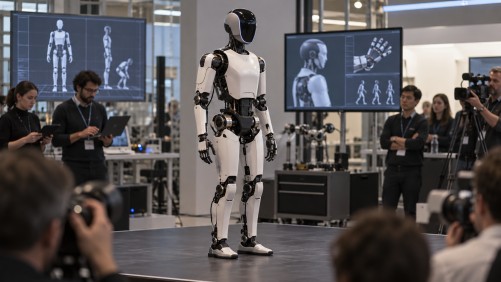
OpenAI is venturing into the realm of physical robotics, with plans to develop a humanoid robot that might be unveiled in a demonstration anticipated for 2027. This ambitious project marks a significant shift as the company explores applications of artificial intelligence beyond the digital sphere and into tangible, physical machines.
CEO Sam Altman has identified key challenges in this endeavor, notably the need for AI systems that can effectively interpret their surroundings, follow complex instructions, and control machinery with precision. The choice to pursue a humanoid design is strategic, given that such robots could seamlessly navigate and operate within environments designed for human use, utilizing existing tools and equipment.
While the specifics of the humanoid robot’s design, technical capabilities, and demonstration features remain under wraps, OpenAI is actively recruiting experts in various fields critical to the project. These include robotics software and hardware, control systems, motion technologies, motor design, machine learning, and manufacturing. This recruitment drive underscores the company’s commitment to assembling a comprehensive technological framework necessary for developing practical robotic solutions.
OpenAI will encounter competition from other technology giants, such as Tesla, which is advancing its own humanoid robot called Optimus, and Chinese automaker XPENG, known for its IRON robot. These initiatives reflect a broader industry trend towards integrating AI with machines capable of executing physical tasks, a field that is rapidly gaining interest and investment.
Ultimately, OpenAI envisions creating general-purpose robots that could assist in skilled labor, particularly in infrastructure construction, and eventually extend to a variety of everyday activities. The company is also exploring alternative robotic designs beyond the humanoid form, indicating a versatile approach to its robotics ambitions.