
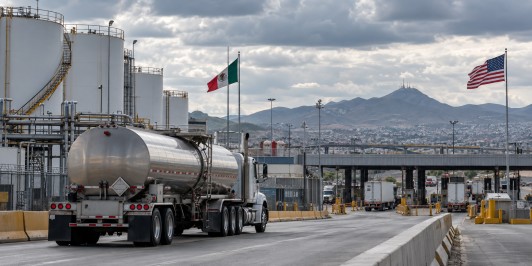
The potential restriction on U.S. diesel exports could have significant repercussions for Mexico’s economy, affecting transportation, agriculture, and other sectors heavily reliant on this fuel. As the country sources over 40% of its diesel from the United States, a change in policy could force Mexico to look for alternative suppliers, likely leading to higher transportation costs and increased pressure on fuel prices and inflation.
U.S. President Donald Trump’s support for a proposal to limit or ban diesel exports comes amid a sharp rise in energy prices, driven by global disruptions linked to conflicts in the Middle East and Ukraine. According to U.S. energy data, Mexico imported an average of 288,000 barrels of U.S. diesel per day in June 2026, underscoring the potential impact of any export restrictions.
In response to these developments, Mexican President Claudia Sheinbaum has reassured the public of the country’s sufficient domestic production capacity. She pointed to the output from Mexico’s refinery network, including the Dos Bocas refinery in Tabasco, as a means to cushion the impact. Additionally, the Mexican government has maintained fuel subsidies and a voluntary pricing agreement with retailers to help stabilize diesel prices.
Energy experts are urging Mexico to take proactive measures to mitigate potential supply disruptions. Recommendations include diversifying diesel import sources, boosting domestic refining capabilities, and enhancing fuel storage capacity to ensure resilience in the face of uncertain U.S. energy policy and global fuel supply challenges.
With the future of U.S. diesel exports in question, Mexico is actively exploring ways to reduce its dependency on its largest supplier, aiming to secure its fuel supply chain against potential international market fluctuations.