
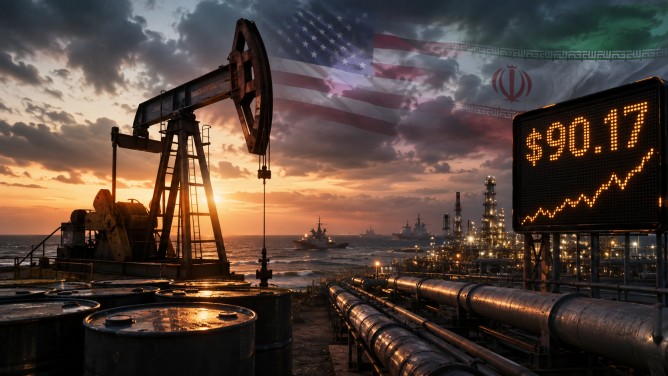
Oil prices have surged as the timeframe for negotiations between the United States and Iran came to a close without reaching a peace agreement, sparking concerns over ongoing conflict potentially disrupting global energy supplies. Brent crude prices climbed above $90 per barrel, reaching approximately $91.63, marking the highest level since July 30. This increase follows President Donald Trump’s ultimatum for Iran to surrender, coupled with his warning of possible escalation if diplomatic efforts falter.
Heightened concerns about the strategic Strait of Hormuz, a vital channel for global oil shipments, are contributing to the unease. The number of commercial vessels navigating this critical passage has notably decreased, raising alarms about the continuity of oil supply disruptions. Reports of an attack on a cargo vessel in the strait have further fueled apprehensions about the security of shipping routes in the region.
Iran’s posture suggests it may take a more assertive military approach should the talks fail, adding to the tensions surrounding the situation. The potential for extended disturbances in oil supplies has led investors to brace for a more prolonged impact. Any sustained closure or diminished traffic through the Strait of Hormuz is likely to exert additional upward pressure on crude oil prices.
Analysts caution that persistent conflict in the Middle East, compounded by the ongoing war in Ukraine, could introduce further volatility into the global energy markets. This scenario risks driving oil and gas prices even higher, posing challenges for the global economy already grappling with energy supply concerns.