
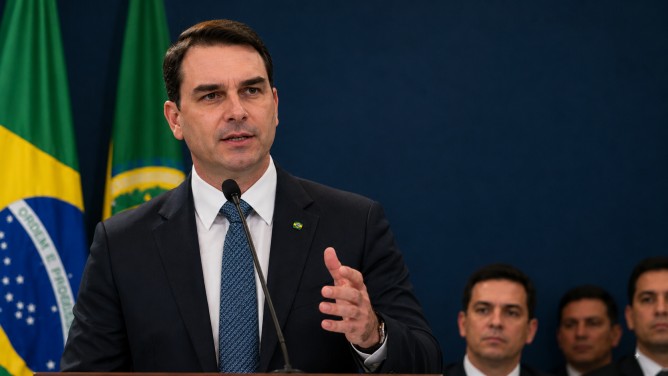
Flavio Bolsonaro, the Brazilian senator, has officially kicked off his presidential campaign for the upcoming October election, securing the Liberal Party’s nomination. His candidacy comes with the endorsement of his father, former President Jair Bolsonaro, positioning him as the heir to his father’s political legacy. Flavio Bolsonaro aims to address pressing issues such as crime, inflation, and high taxes, offering himself as a viable alternative to the current president, Luiz Inácio Lula da Silva, who is also vying for another term.
Despite setting an ambitious agenda, Flavio Bolsonaro’s campaign is not without hurdles. He is currently under scrutiny due to several controversies. Among these is his association with a businessman who is under investigation, sparking questions about his connections. Additionally, a public family dispute involving former First Lady Michelle Bolsonaro has surfaced, further complicating his campaign narrative. The situation is exacerbated by criticism stemming from new U.S. tariffs that are affecting Brazil, adding another layer of challenge to his electoral bid.
The political landscape in Brazil is marked by increasing polarization and economic unease, with trade tensions between Brazil and the United States becoming a focal point of concern. This backdrop sets the stage for a highly competitive election, with recent opinion polls suggesting a narrow lead for President Lula ahead of a possible runoff. As Flavio Bolsonaro strives to gain traction, he is calling for unity among conservative factions to bolster his campaign efforts.
In his bid to consolidate support, Flavio Bolsonaro is emphasizing the need for cohesive action among conservatives, presenting himself as a unifying force amid the divisive political environment. While the campaign progresses, the challenges he faces reflect broader societal and economic issues that resonate with the electorate. As the October election approaches, Flavio Bolsonaro’s ability to navigate these obstacles and appeal to voters will be crucial in determining his success in the race for Brazil’s presidency.