
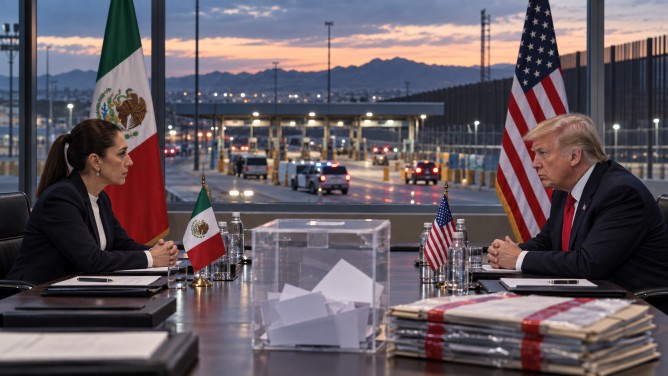
The escalating tensions between Mexico and the United States are poised to significantly impact political landscapes on both sides of the border. As the U.S. prepares for midterm elections and Mexico gears up for its 2027 presidential election, the pressure is mounting on Mexican officials to address allegations of drug trafficking and corruption amid accusations from the Trump administration.
U.S. President Donald Trump has criticized Mexico for not adequately curbing the flow of illegal drugs into the United States and for failing to prosecute officials allegedly linked to organized crime. This issue has become a focal point in the political discourse leading up to the November midterm elections in the U.S., with Trump using it to galvanize support.
In response, Mexican President Claudia Sheinbaum has firmly rejected what she perceives as undue interference from Washington. Sheinbaum has asserted that her administration is actively tackling organized crime and corruption while safeguarding Mexico’s sovereignty. Furthermore, her government has called for the U.S. to enhance its efforts against drug distribution, money laundering, and the illegal trafficking of weapons into Mexico.
The situation has intensified as the U.S. has taken legal actions against Mexican officials accused of having ties with organized crime. In addition, visa cancellations for several Mexican politicians have further fueled the dispute, with President Sheinbaum questioning whether these actions are politically motivated.
Domestically, the accusations have stirred Mexico’s political scene, with opposition parties using claims of “narco-politics” to challenge the ruling Morena party ahead of the upcoming elections. In response, Sheinbaum’s administration has initiated measures to dismantle suspected criminal networks, urging Morena to enforce stricter background checks and financial transparency for its candidates.