
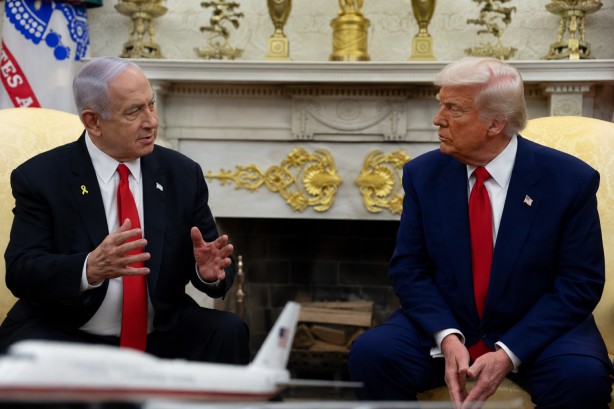
In a significant meeting at the White House, Israeli Prime Minister Benjamin Netanyahu and U.S. President Donald Trump engaged in comprehensive discussions centered on Iran’s nuclear ambitions, regional security concerns, and the future trajectory of U.S.-Israel relations. A senior Israeli official revealed that the leaders explored three potential strategies regarding Iran: negotiating a diplomatic agreement, intensifying economic sanctions, or contemplating military intervention. The dialogue was characterized as an exchange of perspectives rather than an endorsement of a particular course of action.
Netanyahu expressed skepticism about Iran’s commitment to any prospective agreement but refrained from advocating for new military strikes by the U.S. Both leaders concurred on the shared objective of preventing Iran from acquiring nuclear weapons. They also deliberated on methods to amplify economic pressure on Tehran while mitigating adverse effects on global energy markets. Netanyahu stressed that Iran should not be permitted to leverage the Strait of Hormuz in negotiations.
The conversation extended to regional security matters, with specific attention to Israel’s military presence in Syria and southern Lebanon. Netanyahu reportedly utilized maps to articulate Israel’s security apprehensions, highlighting the necessity of maintaining defensive stances against prospective threats. This presentation aimed to underscore the strategic importance of Israel’s military positioning in the region.
Furthermore, the leaders discussed the long-term framework for U.S.-Israel defense cooperation. Netanyahu proposed a strategy to gradually decrease Israel’s dependency on American military aid over the coming decade while simultaneously expanding collaborative defense research and development initiatives. This proposal reflects a vision for a more self-reliant Israel that continues to engage closely with the U.S. in defense advancements.
Despite reports suggesting friction between the two leaders, the senior Israeli official described their relationship as strong and collaborative, underscoring a mutual understanding despite differing views on regional policies. This affirmation of a close partnership suggests a continued alignment in addressing strategic challenges in the Middle East.