
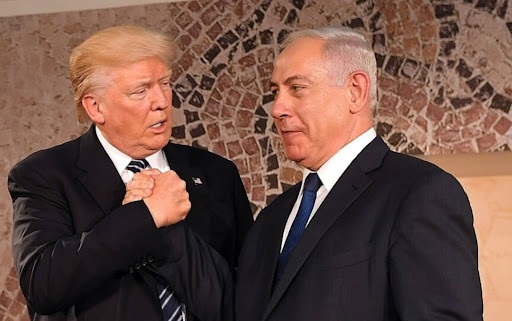
One of the most consequential questions in the US-Israel campaign against Iran — and one that both governments have been reluctant to answer directly — is what constitutes a sufficient endpoint for the conflict. Is the goal to push Iran below the nuclear threshold, ensuring it cannot build a weapon? Or is it to achieve regime change, replacing the current Iranian government with something more moderate? The answer to that question determines the scope, duration, and cost of the war — and the two leading voices in the alliance are giving very different answers.
US President Donald Trump has consistently defined the endpoint in nuclear terms. His statements have focused on ensuring Iran “never has a nuclear weapon” — a goal that can in principle be achieved through targeted military action on specific facilities and capabilities. It implies a bounded conflict with a potential off-ramp once the nuclear threat is adequately degraded. Trump’s recent retreat from regime-change rhetoric reinforces this narrower definition of success.
Israeli Prime Minister Benjamin Netanyahu has defined the endpoint far more expansively. His framing of the war as a chance to reshape the Middle East and replace Iran’s government implies a conflict whose endpoint is political transformation — a goal that is far harder to define, measure, and achieve. It implies a longer, more comprehensive campaign with no inherent off-ramp and no clear threshold for success. Netanyahu’s continued calls for an Iranian uprising reflect this maximalist endpoint.
The divergence was confirmed officially by Director of National Intelligence Tulsi Gabbard, who told Congress that the two governments have articulated different objectives. The confirmation is important because it establishes that the endgame debate is not a matter of interpretation — the two leaders are genuinely pursuing different endpoints, and the difference is consequential for how the war is conducted.
Resolving the endgame debate is, ultimately, the most important thing the two governments could do to align their strategies and reduce the internal friction that South Pars exemplified. Whether they have the political will and strategic capacity to do so — and what compromise between nuclear threshold and regime change might look like — is the defining unresolved question of the US-Israel campaign against Iran.