
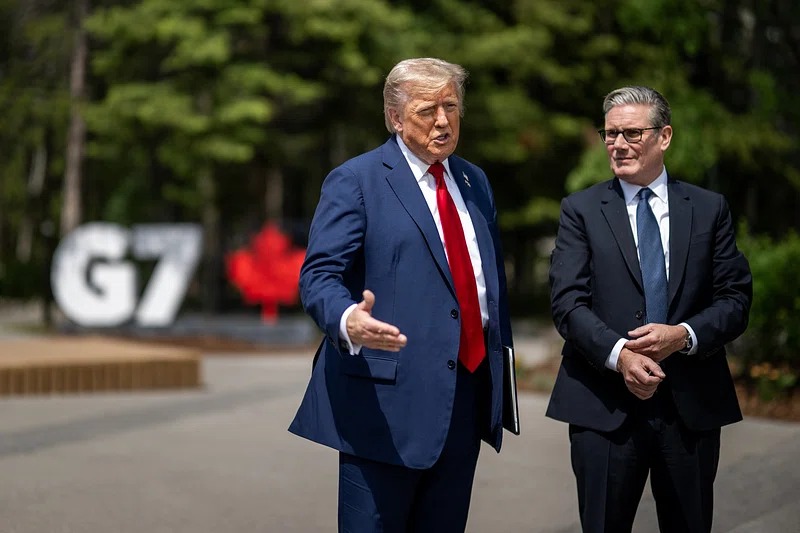
Alliances are easy to celebrate in peacetime and difficult to sustain in crisis. The Anglo-American relationship — often described as the most important bilateral partnership in the world — found itself tested by the Iran conflict in ways that will be studied by diplomats and strategists for years to come.
Britain’s initial decision to withhold cooperation — refusing to allow American forces to use its military bases for operations against Iran — was the moment of maximum tension. It was a decision driven by domestic politics, by caution, and by a genuine ambivalence within the governing party about the nature and purpose of the conflict.
The American reaction was swift, public, and personal. The president targeted the prime minister directly, and the secretary of state reinforced the message at an international forum. The subtext was clear: in the most critical moments, Britain had hesitated — and that hesitation had a cost.
The eventual shift in the British position, allowing limited use of two key military facilities for what were described as defensive purposes, brought some operational relief. American bombers used the Fairford base over a weekend, and British officials pointed to the risk reduction as evidence that the decision had been justified.
But the diplomatic damage required more than operational cooperation to repair. The episode had exposed, in the most public possible way, the limits of the special relationship when domestic politics and strategic imperatives pointed in different directions. Repairing what had been frayed would take time, goodwill, and — perhaps — more than the dispatch of an aircraft carrier.