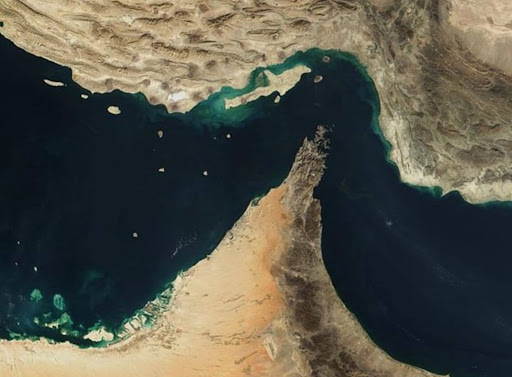
Iran’s stark warning that it will immediately destroy any oil tanker heading for the United States, Israel, or their allies has effectively neutralised President Trump’s campaign to assemble a naval coalition for the Strait of Hormuz — because any navy escorting such tankers faces the same threat by extension. Trump posted on Truth Social calling on the UK, France, China, Japan, South Korea, and all oil-dependent nations to send warships to the embattled waterway, but not a single government has agreed to do so. The threat of direct Iranian military action against naval forces is a critical factor in every government’s calculus.
Iran’s blockade of the strait began in late February as retaliation for US-Israeli airstrikes, generating what analysts describe as the largest oil supply disruption ever recorded. The strait normally channels one-fifth of global oil exports. Tehran has attacked sixteen tankers since the conflict began and raised the possibility of mining the waterway — a combination of threats that makes any naval escort mission both militarily risky and politically explosive for the governments being asked to participate.
France was the most emphatic in ruling out participation. Defence Minister Catherine Vautrin declared that no French ships would be sent while the conflict was active. President Macron had referenced a future purely defensive escort mission, but only for after fighting’s most intense phase. The UK acknowledged ongoing discussions about options including mine-hunting drones. Japan’s ruling party official described the threshold for deployment as very high. South Korea said it was monitoring carefully and exploring protective measures. The EU’s Aspides mission has been proposed for expansion, but Germany has questioned both its effectiveness and the wisdom of extending it.
The economic consequences of maintaining the status quo are significant and intensifying. Global oil prices have risen sharply, and countries most dependent on Gulf crude — particularly in Asia — are absorbing the most acute economic pain. Supply chains that run through the strait carry not only oil but a broad range of traded goods, and their disruption is rippling through international markets. The combined pressure of rising costs and supply uncertainty is accelerating diplomatic discussions even if it hasn’t yet translated into military commitments.
China occupies a uniquely complex position. As an Iranian ally and a top Gulf oil importer, Beijing is in talks with Tehran about allowing tankers to pass — potentially offering a non-military route to partial relief. The Chinese embassy confirmed its commitment to constructive regional engagement. US Energy Secretary Chris Wright said he expected China to be a genuine partner in restoring conditions at the strait, while noting that active dialogue was underway with multiple unnamed nations about finding a path forward for the world’s most important oil shipping corridor.
Tehran’s Tanker Destruction Threat Keeps Allied Navies at Bay in Hormuz Standoff