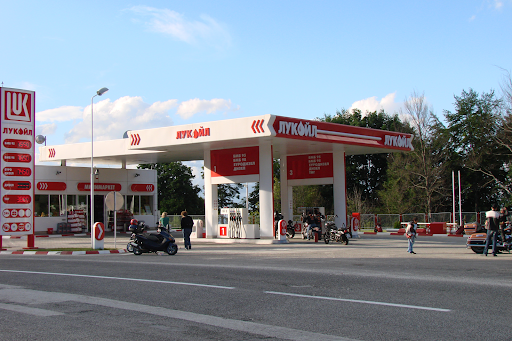
The extensive business empire of Lukoil has been targeted in a strategic military operation where Ukraine strikes Russian oil platforms in the Caspian Sea to weaken the Kremlin’s war machine. The V. Filanovsky, Yuri Korchagin, and Valery Grayfe platforms, all major assets within Lukoil’s portfolio, were reported to have sustained direct hits during an overnight raid. The General Staff of the Armed Forces of Ukraine claimed responsibility for the strike, positioning it as a necessary measure to reduce Russia’s economic capacity to fund its aggression. By crippling the infrastructure that extracts and processes oil, Ukraine aims to cut off the financial resources that pay for Russian missiles, tanks, and soldiers.
The platforms have been the focus of repeated Ukrainian attacks throughout December, suggesting that they are high-priority targets in Kyiv’s strategic planning. The confirmation of direct hits indicates a successful breach of whatever defenses were in place to protect these offshore assets. As the extent of the damage is being assessed, the silence from Lukoil is palpable; the company has not yet issued a statement regarding the condition of the rigs or the safety of the personnel on board. This targeting of specific corporate assets highlights the blurred lines between commercial enterprise and military necessity in a total war scenario where energy exports are the primary driver of the aggressor’s economy.
While the energy war escalates at sea, the ground war continues with equal ferocity in the Luhansk region. Ukrainian forces successfully destroyed a Russian Buk-M3 air defense system, a critical asset for protecting Russian airspace in occupied territories. The destruction of this medium-range launcher, confirmed by multiple explosions, represents a significant tactical loss for the Russian military. It opens up gaps in their air defense coverage, allowing Ukrainian forces to operate with greater security and effectiveness. This kind of precision strike against high-tech weaponry is essential for leveling the playing field against a numerically superior foe.
Furthermore, a strike on a warehouse in the Kherson region aimed to disrupt the material and technical support that sustains Russian combat units. These warehouses are essential for the storage and distribution of supplies, and their destruction causes immediate logistical headaches for Russian commanders. By targeting the “tail” of the army—its logistics and supply chain—Ukraine is weakening the “teeth” on the front line. This strategy of attrition is designed to make the occupation of Ukrainian territory increasingly costly and difficult to maintain.
The conflict’s impact on Russian soil was underscored by a significant drone attack on Voronezh. Governor Alexander Gusev reported that 17 Ukrainian drones were neutralized in what was one of the largest such attacks on the city. Tragically, the raid resulted in one fatality and injuries to four others. These strikes into Russian territory are becoming a regular feature of the war, aimed at disrupting Russian logistics, stretching their air defenses, and bringing the psychological reality of the conflict to the Russian population, who have largely been insulated from the direct effects of the war.
Lukoil’s Empire Targeted as Ukraine Strikes Russian Oil Platforms to Weaken War Machine