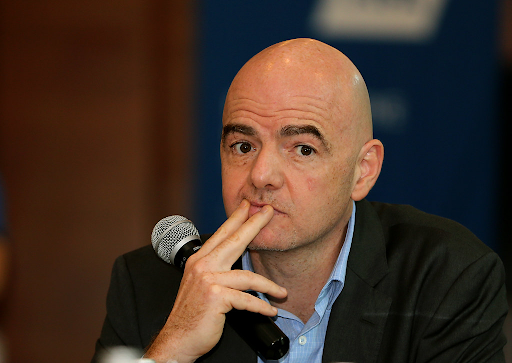
Behind the recent push for a 64-team World Cup is a calculated political move by South America’s football confederation, Conmebol, to increase its power and presence on the global stage. However, this ambition has been quickly checked by FIFA, which has confirmed it is not planning the expansion following a meeting between Conmebol leaders and President Gianni Infantino.
The proposal was formally discussed in New York, where officials from Argentina, Uruguay, and Paraguay presented their case. On the surface, the argument is about inclusivity and a grand centenary celebration. But a 64-team format would also dramatically shift the balance of power, guaranteeing qualification for all ten Conmebol nations and giving the confederation unprecedented influence.
This political dimension is not lost on other confederations, which have pushed back hard. Within FIFA, the proposal is seen as a non-starter. Sources reveal that the FIFA Council, which must approve such changes, is firmly against it. The opposition is not just about logistics; it’s about preventing one confederation from gaining such a significant advantage.
The resistance has been led publicly by UEFA’s Aleksander Ceferin and Concacaf’s Victor Montagliani. Their swift and sharp criticism underscores the political tensions at play, framing the debate as one of regional interest versus the global good of the game. Their stance as FIFA vice-presidents gives them a powerful platform to counter the Conmebol push.
While Infantino gave the South American delegation an audience, the political reality is that the 64-team proposal is too divisive to succeed. For now, the global football community has rejected this particular power play, opting to maintain the current structure as the tournament expands to 48 teams.
Conmebol’s Push for More Power: The Politics Behind the 64-Team World Cup Plan