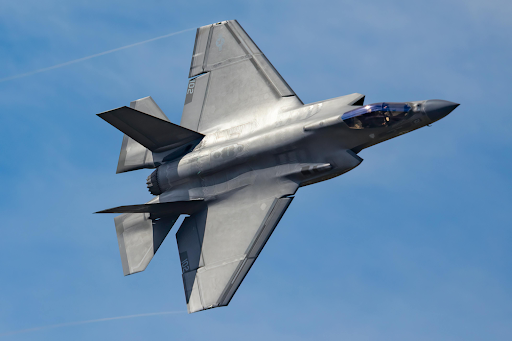
In The Hague, the international city of peace and justice, the Dutch Supreme Court is weighing a case that pits principles of global justice against national interest. The court’s ruling will determine if the Netherlands must ban the export of F-35 fighter jet parts to Israel over allegations of war crimes in Gaza.
The case was brought by human rights organizations that invoked the Netherlands’ special role as a host of international courts to argue it has a heightened duty to uphold international law. They claim that allowing the F-35 parts to be shipped from Dutch soil undermines this role and constitutes complicity.
The government, however, is arguing from a position of national interest and foreign policy realism. It is appealing a lower court’s ban, stating that the decision to halt the shipments should be a political one, not a judicial one. It also fears damaging its relationship with the U.S., which owns the parts.
An appeals court in February 2024 sided with the human rights argument, ordering a stop to the exports and prioritizing the risk of violations of international law. This set up a fundamental clash of worldviews that the Supreme Court must now resolve.
The decision comes at a critical time, with the Gaza war, which began on October 7, continuing to cause immense suffering. The case has become a symbol of the broader struggle to apply international humanitarian law in real-time conflicts and to hold powerful states and their allies to account.
The Hague Weighs Global Justice and National Interest in F-35 Ruling